Jamaica Just Changed the World
A billion-dollar bet on island culture is about to reshape global entertainment, music, fashion, food, and sport in ways nobody is ready for.
Let's be honest — Jamaica has been running the world's culture on a shoestring for decades. Reggae rewired the planet. Dancehall built the backbone of what pop music sounds like right now. Usain Bolt made the entire world stop breathing for nine-point-five seconds. Jerk seasoning is on menus from Tokyo to Tulsa. All of that happened with no billion-dollar infrastructure behind it. No major studio. No government-backed creative economy. Just raw, uncut genius exported from a one-hundred-and-seventy-mile island. Now imagine what happens when the money finally matches the talent. The Jamaican government just announced a landmark billion-dollar investment into the country's creative industry — film production, music infrastructure, culinary branding, athletic development, fashion and cultural tourism — and the ripple effects are going to hit every corner of this earth like a Kingston summer storm.
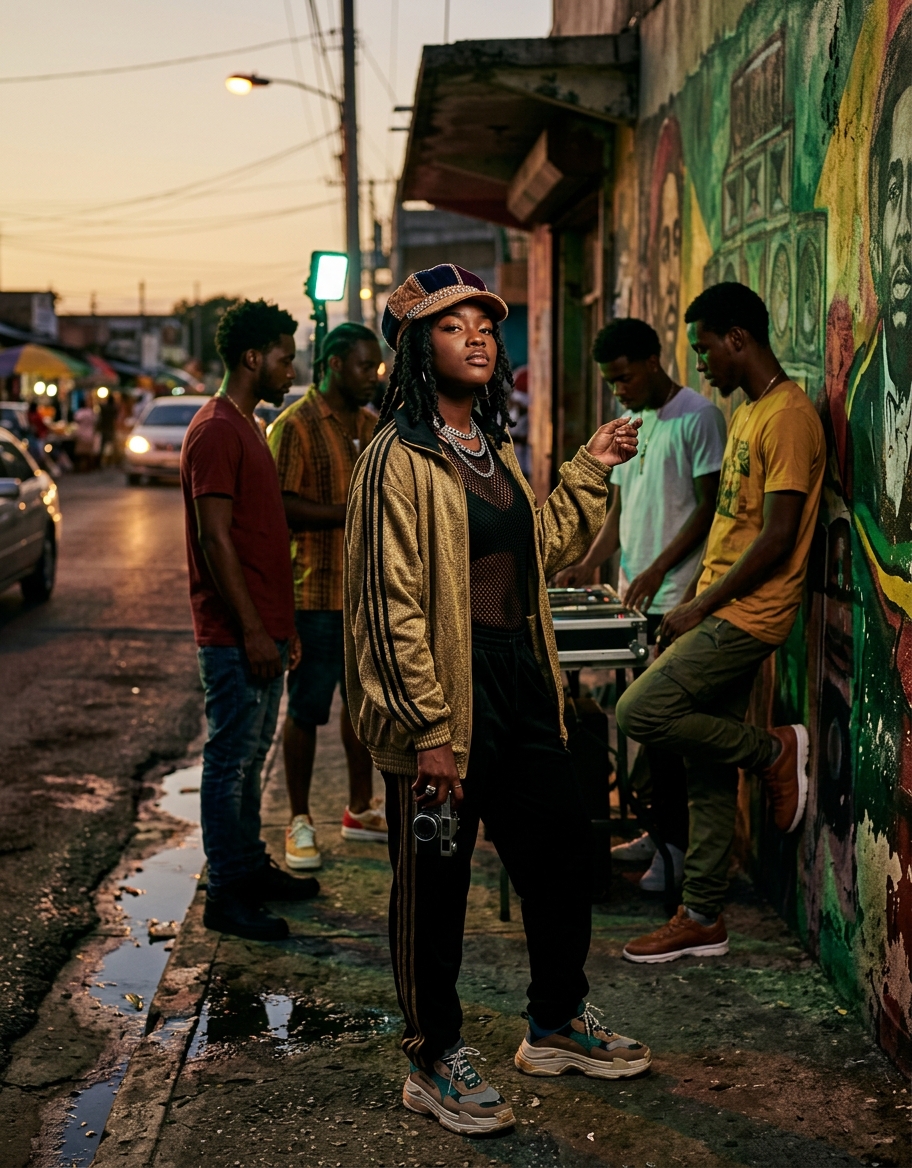
The centerpiece of this move is film and television production, and this is where the seismic shift begins. Jamaica is building out world-class studio infrastructure designed to position the island as the Caribbean's answer to Atlanta or Lagos — a production hub with a built-in culture that no soundstage in Hollywood can manufacture. We are talking original storytelling rooted in Jamaican history, mythology, street life, political fire, and spiritual depth. The same well that gave the world The Harder They Come, that gave dancehall its visual language, that gave Bob Marley his iconography — that well is now getting a pipeline. International co-productions, streaming deals, diaspora-driven narratives. The content that comes out of this is going to hit different because it won't be filtered through a foreign lens. It will be Jamaica, uncut and uncompromised, speaking directly to the one-point-five billion people worldwide who already feel a spiritual connection to this island without ever having set foot on it.
 Hip Vodka Island life
 Then there is the music economy, which is arguably the most consequential piece of this entire investment. Dancehall and Afrobeats have been in a beautiful, competitive conversation for the last five years, both fighting for the soul of global pop. But Jamaica's infrastructure for developing, recording, distributing and monetizing its artists has historically lagged behind its cultural output. This investment changes that equation immediately. State-of-the-art recording facilities, artist development pipelines, publishing infrastructure, sync licensing frameworks — the machinery that turns great music into generational wealth. When you give Jamaican artists the same tools that Nashville or London takes for granted, you are not just helping those artists. You are supercharging a sound that already has a stranglehold on global taste. Producers, labels, brands and streaming platforms should be booking their Kingston flights right now.
Sport and food cannot be slept on in this conversation either. Jamaica's athletic identity is one of the most powerful nation brands on earth — the sprinting dynasty alone is worth billions in soft power. Now that infrastructure investment is meeting athletic development with purpose, expect Jamaica to diversify its sports dominance and export that competitive culture through media, merchandise, training academies and sports tourism in a way that turns the island into a year-round destination for performance and lifestyle. On the food side, Jamaican cuisine has been criminally underrepresented in the global fine-dining and food-media conversation relative to its actual influence. That changes when you attach investment capital, culinary schools, food tourism infrastructure and intentional branding to a flavor profile that the world is already obsessed with. Jerk is just the beginning. Ackee, oxtail, rum culture, farm-to-table storytelling rooted in the Blue Mountains — there is a Michelin-starred, James Beard-nominated, Netflix-docuseries future waiting here.
For the global culture economy — for hip-hop, for streetwear, for travel, for the entire world that NERO SUN lives in — this is a category-defining moment. Jamaica has always been a source code. A place other cultures dipped into to find their sound, their swagger, their spiritual center. What this billion-dollar investment signals is that Jamaica is done being the source and not the beneficiary. The island is building its own ecosystem, its own IP, its own economic engine around the culture it created. The artists, the athletes, the chefs, the filmmakers, the designers — they are about to get the infrastructure that matches their ambition. And when that happens, the world does not just get more Jamaica. The world gets a Jamaica that finally controls its own story. That is not just good for Kingston. That is good for every culture that ever borrowed a rhythm, a phrase, or a plate from this island and called it their own.


