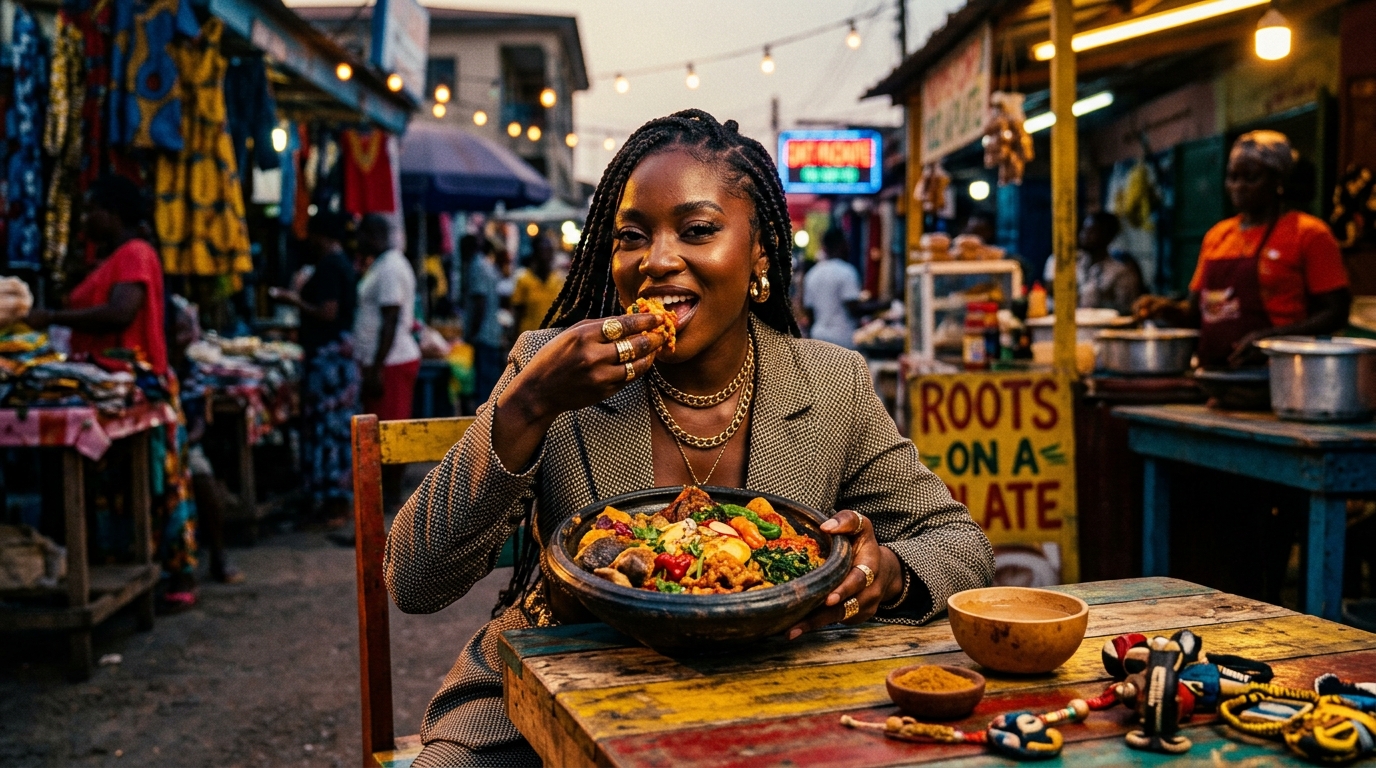
ROOTS ON A PLATE
Ackee and saltfish was born in Jamaica but its soul has been quietly feeding Canada for generations.
Before the brunch menus, before the food influencers started hashtagging their way through Kingston's back streets, ackee and saltfish was already doing the quiet, dignified work of keeping a diaspora alive. This is Jamaica's national dish — official since 1991, legendary since forever — and if you think it belongs only to the island, you have clearly never walked through Scarborough on a Sunday morning when somebody's grandmother has the cast iron going before the sun comes up.
Let's set the record straight on what this dish actually is. Ackee, the jewel of the plate, is a West African fruit brought to Jamaica in the 1700s — some say on the same ships that carried enslaved people across the Atlantic, which means the dish carries that history in every bite whether you acknowledge it or not. Salt cod, the fish half of the equation, arrived through the brutal mechanics of colonial trade, salted and dried in the North Atlantic, shipped south as cheap protein for plantation workers. Two ingredients born from suffering, transformed by Jamaican hands into something transcendent. That is the alchemy this culture has always been capable of.
 Hip Vodka Island life
 Now here is where Canada enters the story with the kind of quiet permanence that only reveals itself when you start paying attention. The Jamaican-Canadian community, concentrated heaviest in Toronto but stretched wide across Montreal, Calgary and beyond, has maintained this dish as a living cultural document for decades. Since the 1960s immigration wave that brought Caribbean families north under new federal policies, ackee and saltfish has sat at the center of every family table, every church hall fundraiser, every sound system party spread. The Canadian Jamaican population now numbers well over 300,000 people strong, and behind nearly every single one of those stories is a pot that smelled exactly like this.
The Canadian connection goes even deeper than nostalgia. For years, Canada's trade relationship with Jamaica meant Canadian-caught and processed salt cod was actually shipped south and became the very fish folded into the national dish. Newfoundland and Nova Scotia fishermen were, in a roundabout colonial loop, feeding the Caribbean. That salt cod connection still runs commercially today, threading the two countries together in ways that neither government particularly advertises but that any Caribbean grandmother shopping at a West Indian grocery in Brampton could tell you without blinking.
In Toronto's Kensington Market and along Eglinton Avenue West — long crowned Little Jamaica before the developers started circling — you can still find the dish served with the authority it deserves. Sautéed with scotch bonnet, onion, tomato and thyme, the ackee breaks down into something buttery and rich that has no business being described as humble. It is eaten at breakfast because Jamaican people understood what the rest of the world is just now catching on to: that the most important meal of the day deserves actual flavor, actual history, actual intention.
The dish is having its global moment — showing up in New York tasting menus, London's buzzing Afro-Caribbean spots, Los Angeles pop-ups where chefs are finally getting credit for the food their grandmothers made without a single Michelin inspector ever walking through the door. But Canada has known. Canada, specifically the Black Canadian community that built neighborhoods and businesses and whole cultural universes while the country looked the other way, has always known. Ackee and saltfish is not a trend here. It is a testament. And that distinction, like the dish itself, is everything.


