Born to Blaze: The Jamaican Speed Gene Has No Passport
From Kingston to the world stage, Jamaica keeps manufacturing the fastest humans alive — and nobody's figured out how to stop it.
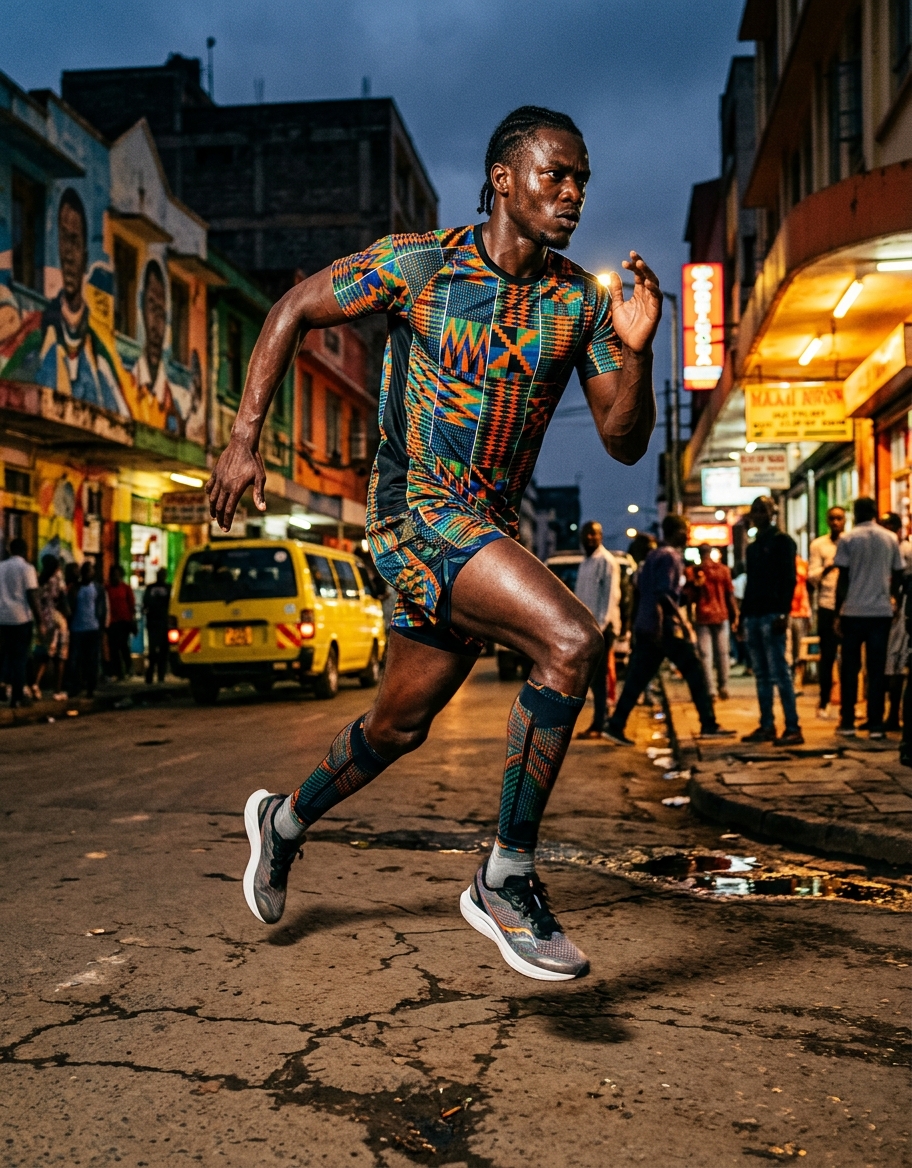
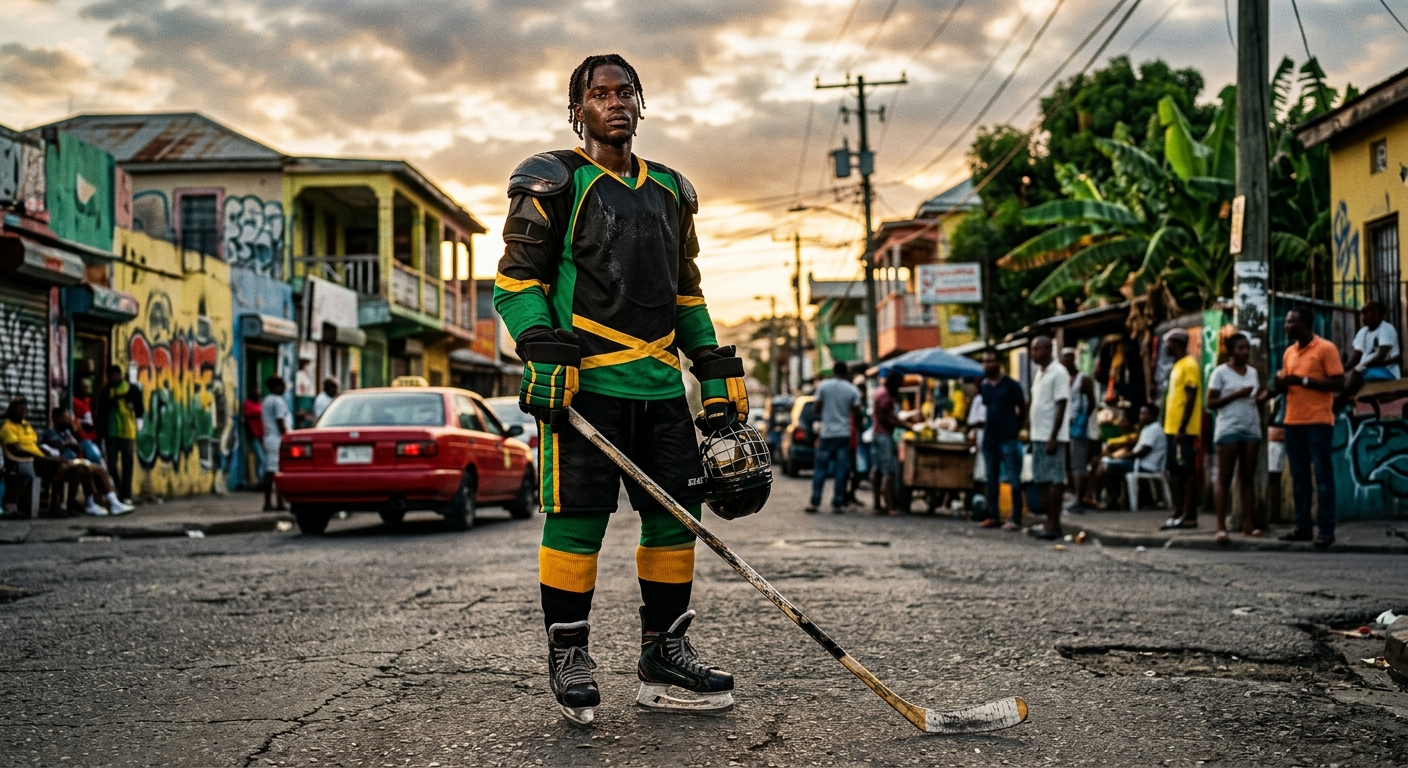
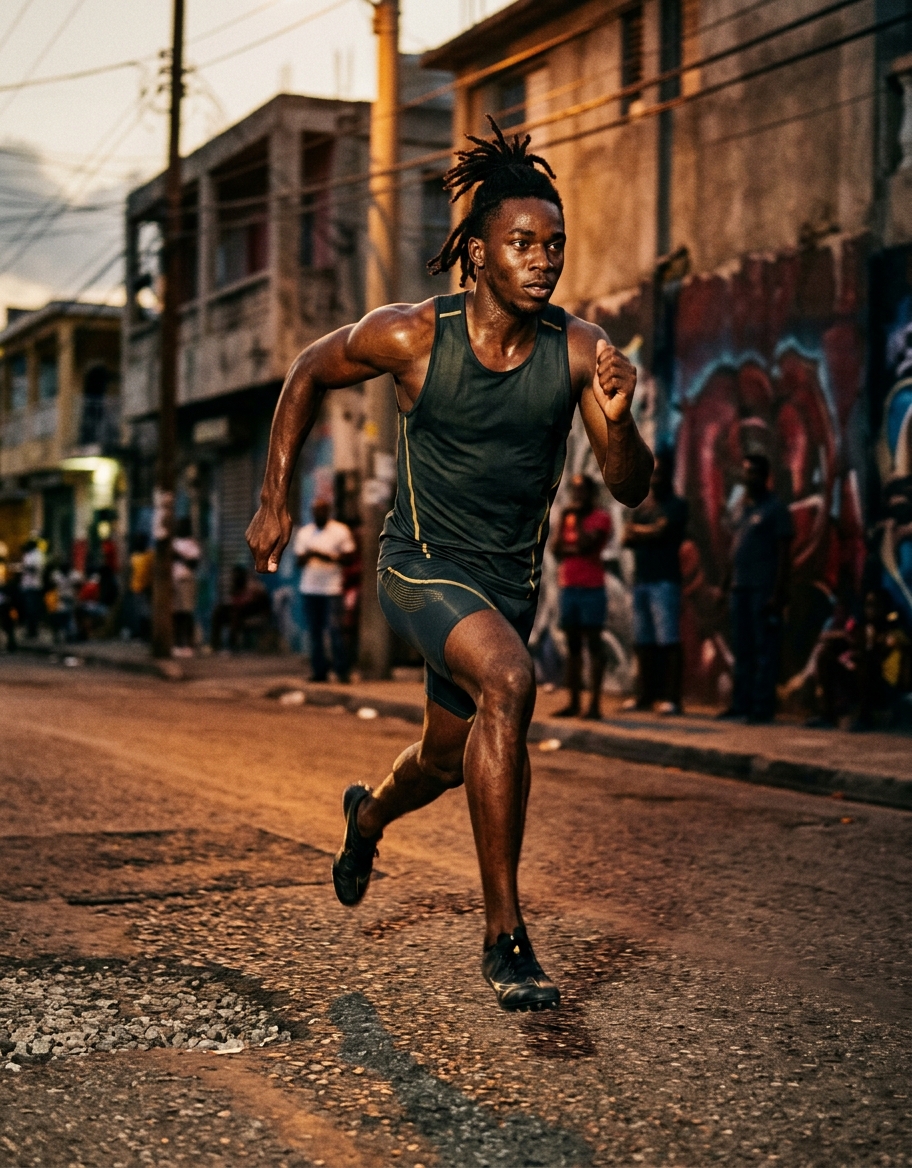
There is a small island in the Caribbean Sea, roughly the size of Connecticut, with no oil reserves, no sprawling sports infrastructure, no billion-dollar academies funded by sovereign wealth funds. What Jamaica has instead is something that cannot be built, bought, or replicated in a lab — an almost supernatural ability to produce the fastest human beings on the planet, generation after generation, regardless of which flag they eventually run under. Elaine Thompson-Herah. Shelly-Ann Fraser-Pryce. Usain Bolt. Yohan Blake. Shericka Jackson. The names stack up like trophies in a dynasty that refuses to end. And if you think that dynasty is limited to athletes who represent the black, green, and gold, think again.
Look closer at the starting blocks of every major sprint final across the last three decades and you will find Jamaican blood pulsing through athletes wearing the colors of the United Kingdom, the United States, Canada, and beyond. Linford Christie. Donovan Bailey. Zharnel Hughes. Kyree Campbell. These men were born in Jamaica or carry Jamaican lineage like a superpower coded into their DNA. The island does not just produce champions for itself — it exports raw speed to the entire world, and the entire world cashes in on it. Jamaica is the Silicon Valley of human velocity, and every nation with a track program wants a piece of the intellectual property.
 Hip Vodka Island life
 The question everyone keeps asking is why. Scientists have pointed to the yam-rich diet of the Accompong Maroons in the island's interior, a community of escaped enslaved Africans whose isolation preserved genetic traits linked to fast-twitch muscle dominance. Researchers have studied the unique concentration of the ACTN3 gene — nicknamed the speed gene — in Jamaican athletes, finding percentages that defy statistical norms. Coaches like Norman Peart and Stephen Francis have spoken about a culture of track and field that begins at age seven, where inter-school competitions like Champs are not just sporting events but national religion, drawing crowds and energy that most countries reserve for football World Cups. The truth is probably all of it at once — genetics, culture, diet, will, and an island-wide refusal to be small.
But let us not reduce this to a science experiment, because what Jamaica produces is not just fast legs — it is a particular breed of athlete who carries confidence like a second skin. There is a strut to Jamaican sprinters that no coaching manual can teach. When Shelly-Ann Fraser-Pryce stares down a field of elite competitors, she is not nervous — she is impatient. When Usain Bolt was at his peak, he did not just break world records, he embarrassed them. That psychological edge, that deep-seated belief in one's own greatness, is perhaps the most exportable Jamaican product of all. Athletes who grow up in that environment carry that energy with them to London, Toronto, Houston, or wherever the wind takes them.
The track world is finally reckoning with this reality in real time. As World Athletics debates eligibility rules and nations quietly scout Jamaican youth programs for transferable talent, the island keeps replenishing its pipeline with ruthless efficiency. Right now, there are teenagers on that island running times that would have medaled at the 2012 Olympics. The machine does not pause. The factory does not close. And while the geopolitical drama of who gets to claim these athletes plays out in boardrooms and eligibility hearings, Jamaica simply keeps producing more — unbothered, unmatched, and unquestionably the greatest sprint nation the earth has ever seen.
At NERO SUN, we do not just respect greatness — we study it. And what Jamaica has built in that track oval is the most consistent, most stunning, most culturally rich athletic movement of the modern era. It is bigger than sport. It is identity, survival, pride, and pure human electricity compressed into a hundred-meter stretch of rubber and ambition. The rest of the world can keep arguing about speed. Jamaica already knows it owns the conversation.