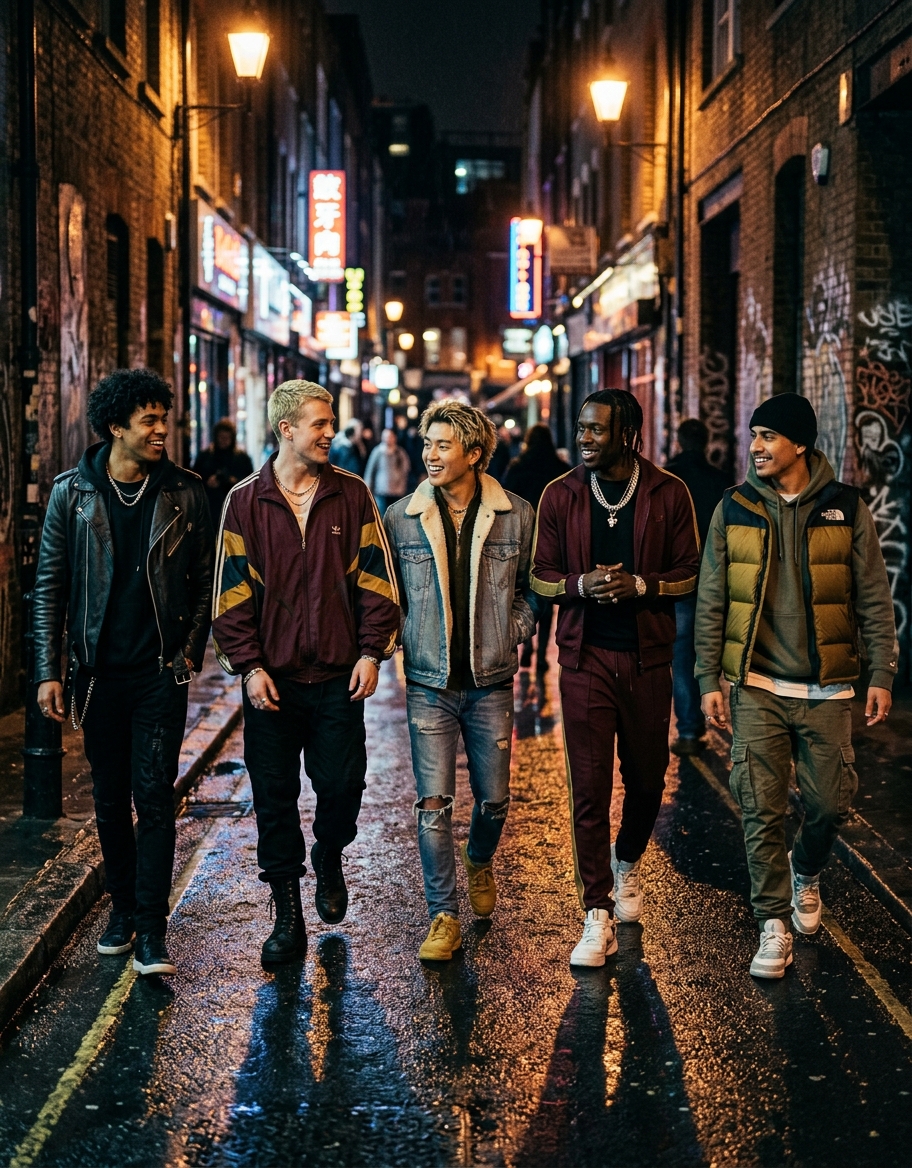
Boy Bands Ain't Dead, They Just Moved Addresses
While North America buried the boy band, Asia kept the blueprint alive — and now the whole world is paying attention.
Let's get something straight before we even start: the boy band is not dead. It did not die when *NSYNC went on their indefinite hiatus that somehow lasted twenty-three years. It did not flatline when One Direction splintered into five separate solo careers of wildly varying quality. What happened is simpler and more humbling than that — North America stopped caring, and the rest of the world simply kept building.
Asia, particularly South Korea and Japan, never got the memo that coordinated choreography and synchronized harmonies were supposed to be embarrassing. Instead, they engineered the format into something that operates less like a music group and more like a cultural institution. BTS sold out stadiums that rock legends would envy. SEVENTEEN runs their own creative infrastructure. Stray Kids produce their own records. The boy band did not collapse — it evolved, and it did so roughly twelve time zones away from anyone in Los Angeles or New York who was too cool to notice.
 Clear Nights Smooth Finish
Meanwhile, North America has been in its feelings about masculinity in pop for the better part of a decade. The industry leaned hard into the lone-wolf aesthetic — the tortured solo artist, the rapper, the bedroom producer with a SoundCloud and a side part. Groups got coded as corporate, manufactured, soft. That cultural snobbery created a vacuum, and K-pop drove a freight train through it without blinking. The fans filled arenas. The merchandise moved. The streaming numbers were ungodly. The market did not lie even when the critics looked away.
But here is where it gets interesting — North America is not as checked out as it pretends to be. You are watching it happen in real time. BIGHIT and HYBE have offices stateside now. Groups like TOMORROW X TOGETHER and ENHYPEN are quietly cracking Western charts. And then there is the new American experiment: groups like Now United and the HYBE-backed boy band project born out of their joint venture with Scooter Braun's ITHACA Holdings are trying to bring the format back home with Korean DNA stitched into an American frame. Call it cultural arbitrage. Call it the boy band renaissance. Either way, the suits smell money.
The bigger truth is that Gen Z never actually had the allergy to boy bands that millennials developed after years of oversaturation. They grew up watching K-pop concerts on YouTube before they ever heard an argument about authenticity. For them, a group of young men who can sing, move, and put together a coherent aesthetic is just good content — no irony required, no apology necessary. That generational shift is the real reason North American labels are starting to quietly retool their rosters and look at what Seoul has been doing with envy and a notepad.
So are boy bands over in North America? Nah. They are just in their comeback arc. Asia held the torch, refined the flame, and made the whole format undeniable again. The West is watching, the West is learning, and if you know anything about how pop culture cycles work, you already know what comes next. The boy band is not checking in — it is checking back in, and this time it has better choreography, a stronger brand identity, and receipts from every continent on earth.