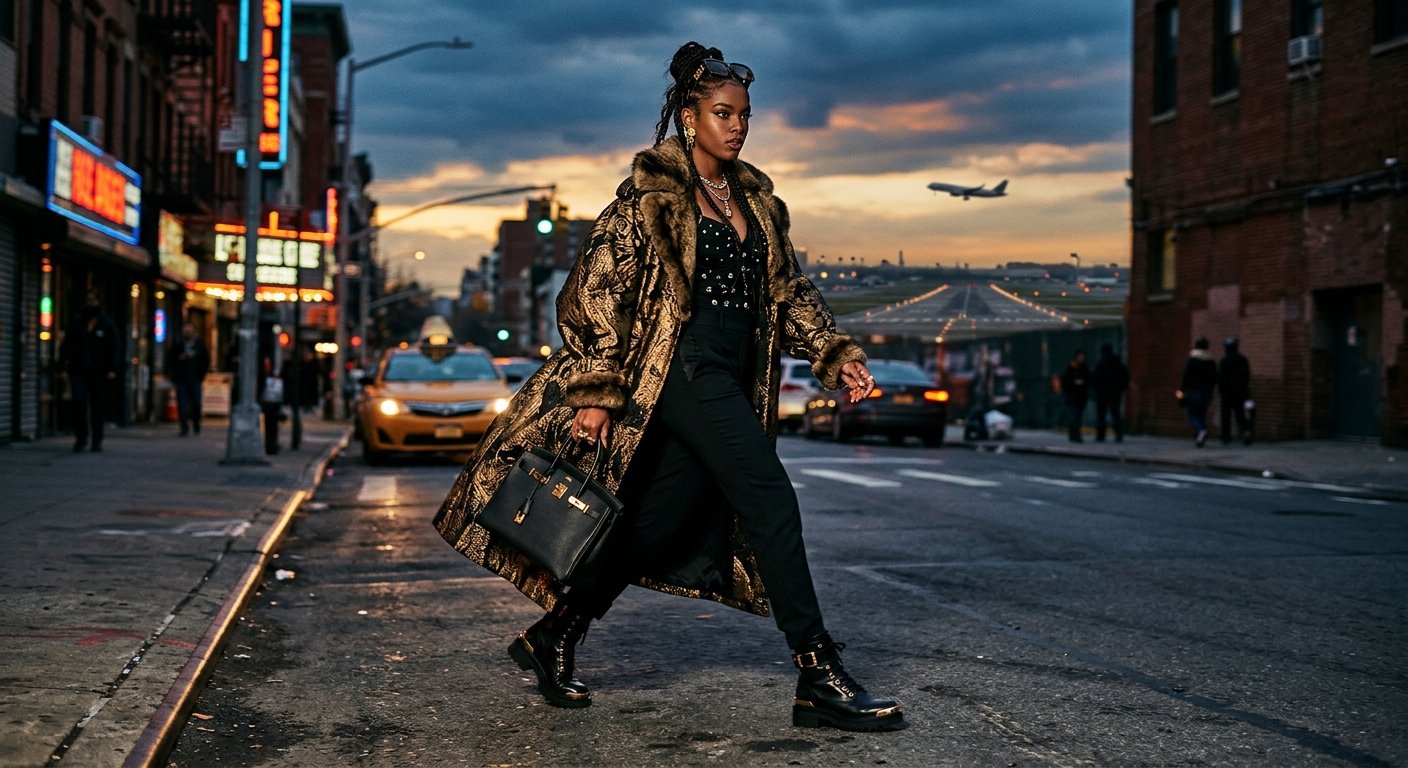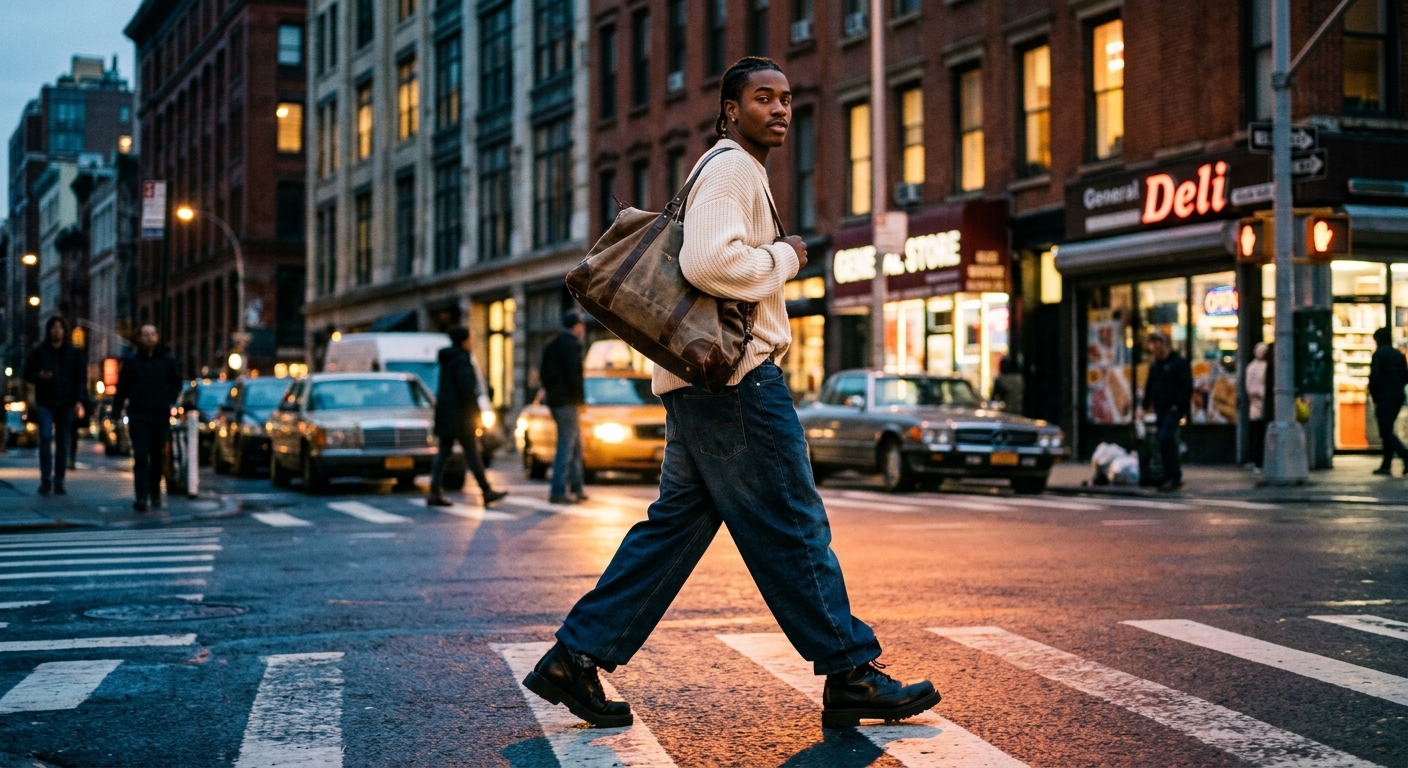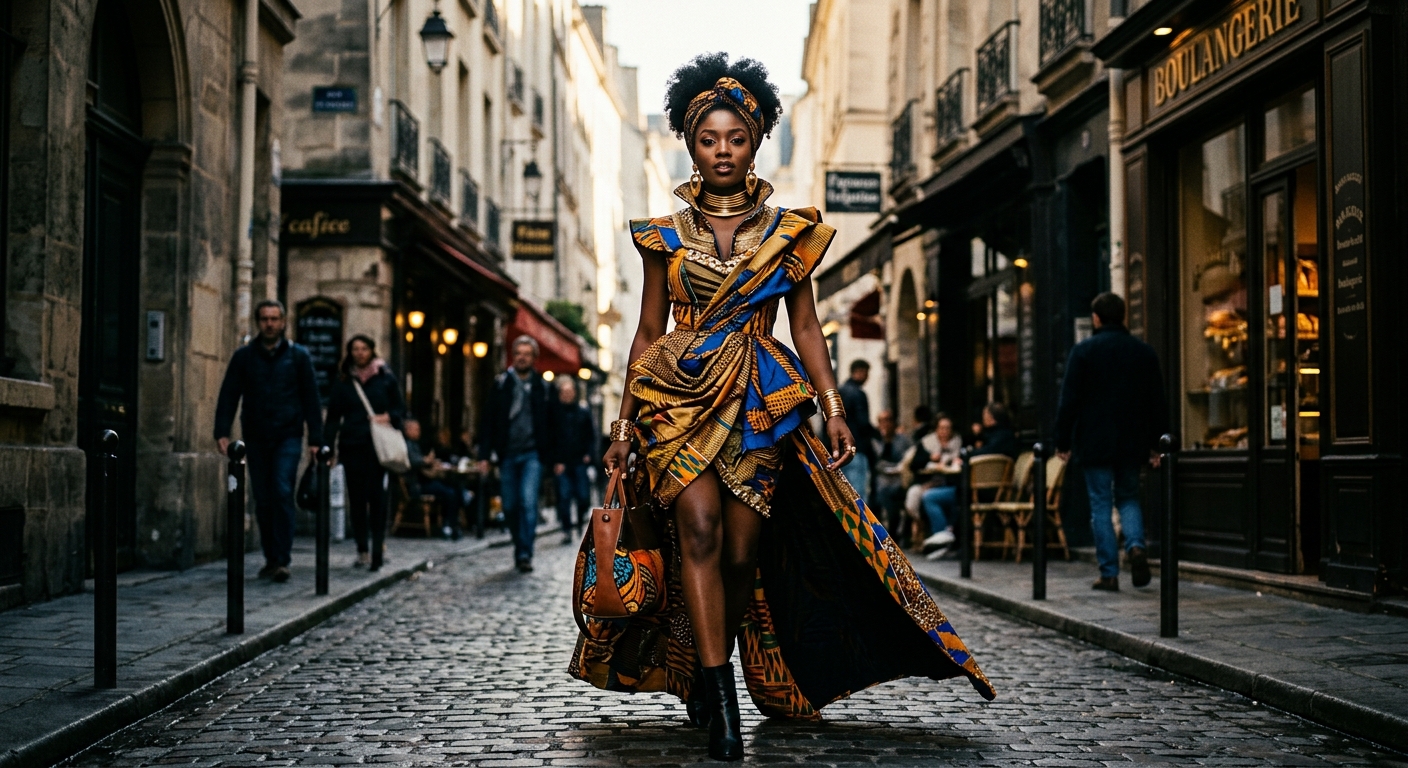
FROM PARIS TO THE MOTHERLAND: HOW AFRICA BROKE HAUTE COUTURE WIDE OPEN
The revolution that started on the Seine is now being rewritten on African soil, and the old guard of fashion has no choice but to pay attention.
Haute couture was never supposed to be democratic. Born in the gaslit salons of mid-19th century Paris, it was a declaration of power dressed in silk and hand-stitched boning. Charles Frederick Worth, an Englishman with an ego the size of the Louvre, planted his flag on the Rue de la Paix in 1858 and convinced the aristocracy that clothing was art. The French government agreed, codified the whole thing, and suddenly fashion had a capital city and a rulebook. For over a century, the game was played entirely on European terms — the fabrics, the silhouettes, the gatekeepers, all of it. If you weren't Parisian, you were peripheral. Full stop.
Then the 20th century started cracking the foundation. Coco Chanel liberated women from the corset. Yves Saint Laurent put a Black woman — Katoucha Niane — on the runway and dressed women in power suits that made boardrooms nervous. The 1960s and 70s brought provocation, politics, and protest straight onto the catwalk. But even as the definition of couture stretched and evolved, its center of gravity barely moved. Paris was still Paris. The throne wasn't up for debate.
What nobody in those Seventh Arrondissement ateliers predicted was Africa. Not Africa as an aesthetic footnote — not the tired colonial habit of European designers plundering Ankara prints and kente cloth without credit or compensation — but Africa as an originating force. Designers like Imane Ayissi from Cameroon, Roksanda-cited Thebe Magugu from South Africa, and Lagos-born Lisa Folawiyo began constructing a new couture language, one rooted in indigenous craft traditions that predate Worth by centuries. Magugu became the first African designer to win the LVMH Prize in 2019. That wasn't a moment. That was a seismic shift.
Lagos Fashion Week and Arise Fashion Week in Lagos are no longer regional showcases with global ambitions — they are global stages, full stop. Photographers from Vogue Italia and buyers from Dover Street Market are booking flights to Nigeria the way they used to book flights to Milan. The fabrications coming out of Accra, Nairobi, and Cape Town are doing things with texture, color, and cultural narrative that the ateliers on Avenue Montaigne simply cannot replicate, because they lack the lived vocabulary. You cannot fake that kind of specificity. It is either in your bloodline or it is not.
The deeper revolution is philosophical. Classical Parisian couture was built on exclusion — on the idea that beauty was scarce, that elegance had an address, and that access required a very particular kind of money and pedigree. African fashion, even at its most elevated, carries a fundamentally different ethic. It is communal. It honors the weaver, the dyer, the pattern-cutter as much as the name on the label. When Adama Paris declares that African luxury is not an imitation of European luxury but a parallel and ancient tradition, she is not being defensive. She is being precise.
The story of haute couture is not over — it is simply no longer mono-continental. Paris still matters; the Chambre Syndicale still sets certain standards; the July and January shows still carry weight. But the conversation about what fashion can be, what it can say, whose bodies it celebrates, and whose hands it honors has moved decisively. Africa did not ask for a seat at the table. Africa built a longer one, set it in the sun, and the whole industry showed up hungry. The revolution Worth started in 1858 just found its most radical chapter yet, and it is being written in Dakar, Lagos, and Johannesburg.