STRIPES DON'T LIE
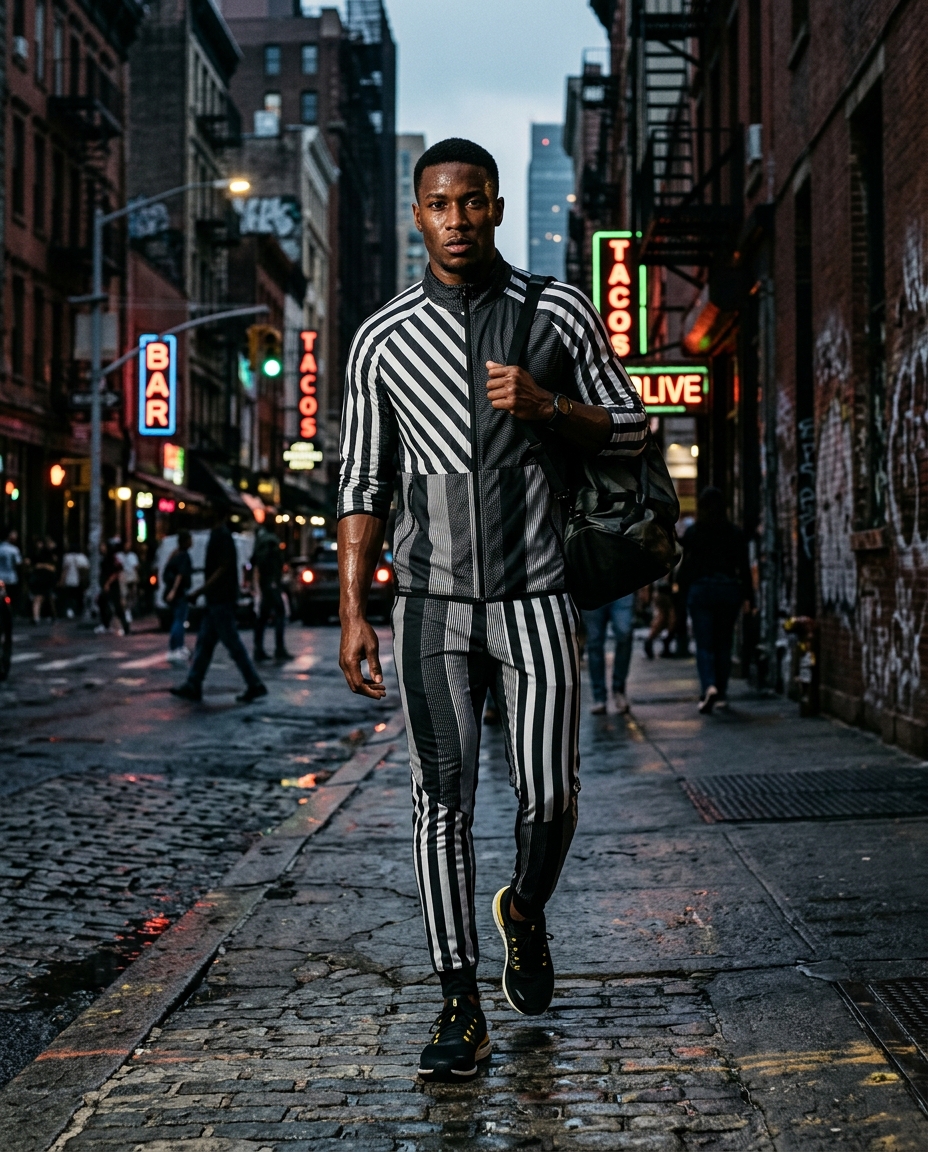
The adidas black-and-white track suit wasn't just a warmup — it was a declaration of war on mediocrity.
Before the first whistle blew, before a single layup was attempted, the adidas black-and-white track suit told the whole story. Every junior basketball team that walked into a gymnasium wearing those crisp three-stripe coordinates in the 1980s already won something — the room. The attention. The respect. That suit wasn't fabric and elastic. It was a manifesto stitched together in two colors that said everything without a single word. We are here. We are serious. And we are coming for everything you have.
There was a psychology to it that coaches understood and kids felt in their bones. When your squad walked out coordinated — matching tops, matching bottoms, those clean white stripes cutting through the black like lightning — you stopped being a group of kids from the neighborhood and became something bigger. A unit. A program. You looked like the pros you stayed up late watching on television, and that visual connection rewired your belief system from the inside out. Aspiration has always been the most powerful performance enhancer on the planet, and adidas handed it to you in a gym bag.
Adidas didn't manufacture that moment by accident. They read the room with surgical precision, understanding that youth sports culture was hungry for identity and that identity moves in uniform. The brand planted its flag in gymnasiums, recreation centers, and community courts across America and let the culture do the marketing. Those junior ballers grew up, kept buying, kept believing, and kept wearing the stripes. That is not a product strategy — that is cultural architecture. Built slow, built real, built to last decades.
Any given day, that black-and-white track suit still hits different. Pull it out of the closet and something clicks — the posture changes, the walk shifts, the confidence rises to meet the moment. That is the power of a garment that carries genuine cultural weight. Adidas rode the culture train all the way to the bank, but the truth is the culture was happy to give them the ticket. Because when something makes you feel like a pro before you ever become one, that is not a brand doing you a favor. That is a brand building a legacy on the backs of dreamers who had every intention of delivering.