THE WALL IS THE STAGE
Before streaming algorithms and TikTok trends, the city itself was the canvas — and graffiti writers were the original content creators.
There is no art form more honest than one that risks everything to exist. Graffiti does not ask for gallery wall space or curatorial approval. It takes. It claims. It signs its name in 30-foot letters on the side of a freight train rolling through six states, and it does not wait around for a review. Long before hip-hop had record deals or sneaker collaborations, it had walls — and the writers who turned concrete into autobiography built the visual DNA of an entire culture that the world is still reverse-engineering today.
The lineage runs deep and deliberate. From the subway tunnels of 1970s New York, where TAKI 183 and PHASE 2 were mythologizing themselves before the internet could do it for them, to the sun-scorched overpasses of Los Angeles where crews like K2S and MSK rewrote the rules of West Coast wildstyle, graffiti has always been less about vandalism and more about sovereignty. You tag a wall, you own a moment. You throw up a piece that survives three city buff cycles, you become legend. The streets keep score in ways no algorithm can replicate.
 Clear Nights Smooth Finish
What the culture understands — and what mainstream art institutions are still fumbling to articulate — is that graffiti is not decoration. It is declaration. When Os Gemeos blanketed entire São Paulo neighborhoods in their golden-faced giants, they were not beautifying a city. They were narrating it. When Banksy dropped stencils in Gaza or on the apartheid wall in the West Bank, the work carried more editorial weight than a hundred op-eds. The spray can has always been mightier than the press release. Style, placement, risk, and intent collapse into a single image that hits harder than anything hanging in a climate-controlled white cube.
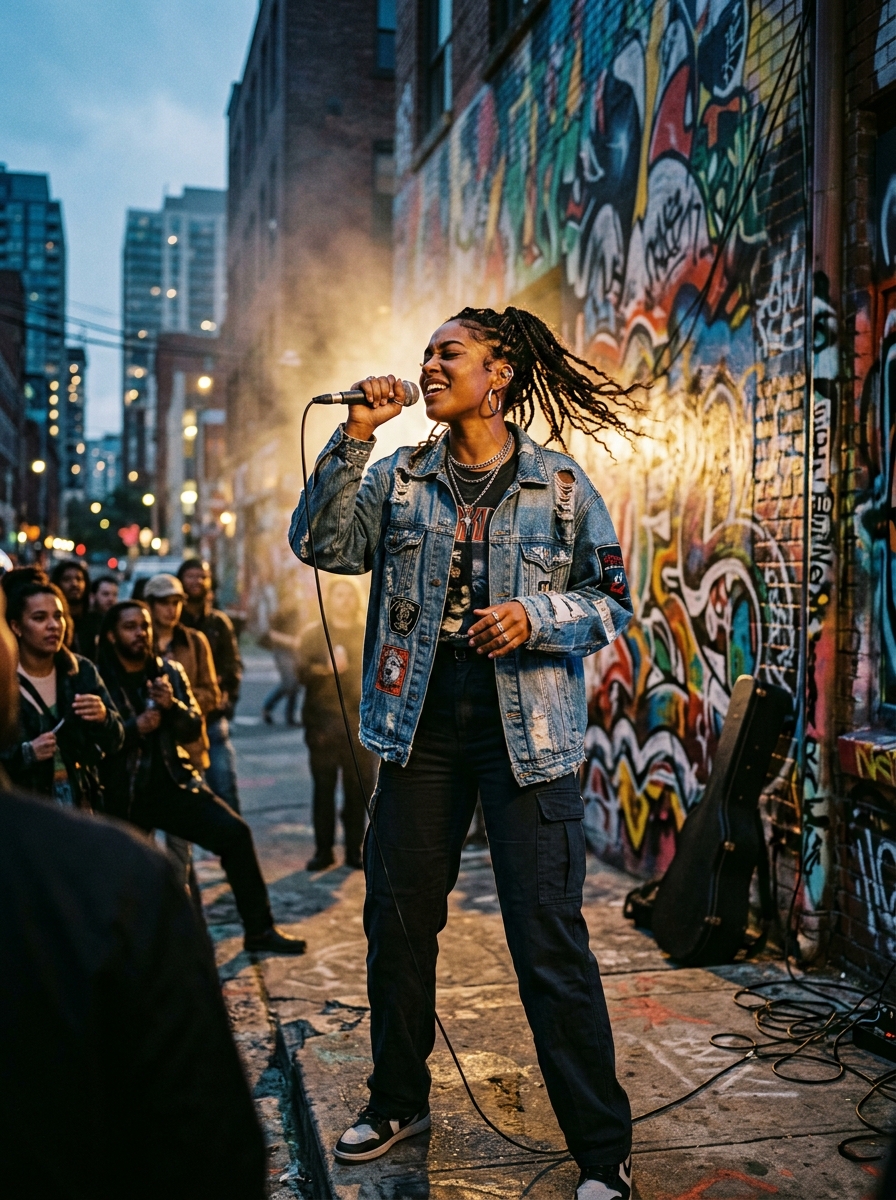
Fashion caught on. Music caught on. The boardrooms caught on last, which is exactly how it should work. Supreme built an empire on the aesthetic grammar of New York street writing. Virgil Abloh lifted the energy of graffiti's irreverence — the slashes, the quotation marks, the public interruption — and carried it into Louis Vuitton's ateliers. Rappers from Jay-Z to Kendrick Lamar have stationed themselves in front of murals not as backdrop but as context, signaling to anyone paying attention that the wall behind them is not set dressing. It is credential. It is community. It is proof of place.
Today, writers like Pose, Retna, and Lady Pink operate in a world that simultaneously worships and misunderstands their craft. Blue-chip collectors pay six figures for canvases by artists who came up bombing highway sound barriers at 3 a.m. Cities commission murals from writers they once prosecuted. The contradiction is loud, and the culture holds it with a practiced cool — because graffiti has always known how to survive contradiction. It evolved inside it. The tension between illegal and celebrated, ephemeral and immortal, anonymous and iconic, is not a problem to solve. It is the whole point.
The wall was never just a wall. It was a broadcast tower, a newspaper, a flex, a funeral announcement, a love letter, a manifesto. Every city on earth carries the handwriting of people who refused to be invisible, who picked up a can when they had no other microphone and made sure the block knew their name. That is not vandalism. That is history being written in real time, in colors that do not fade quietly, by hands that never asked for permission and never needed it.